Re-Inhabiting Conservation: Using Art to Bring Wildlife Conservation Closer to Home reconsiders the role of artists in wildlife conservation and explores the possibilities of art informed by science. The exhibition features work by visual artists and writers from 11 countries, and is produced in collaboration with GoggleWorks Center for the Arts in Reading, Pennsylvania, USA.
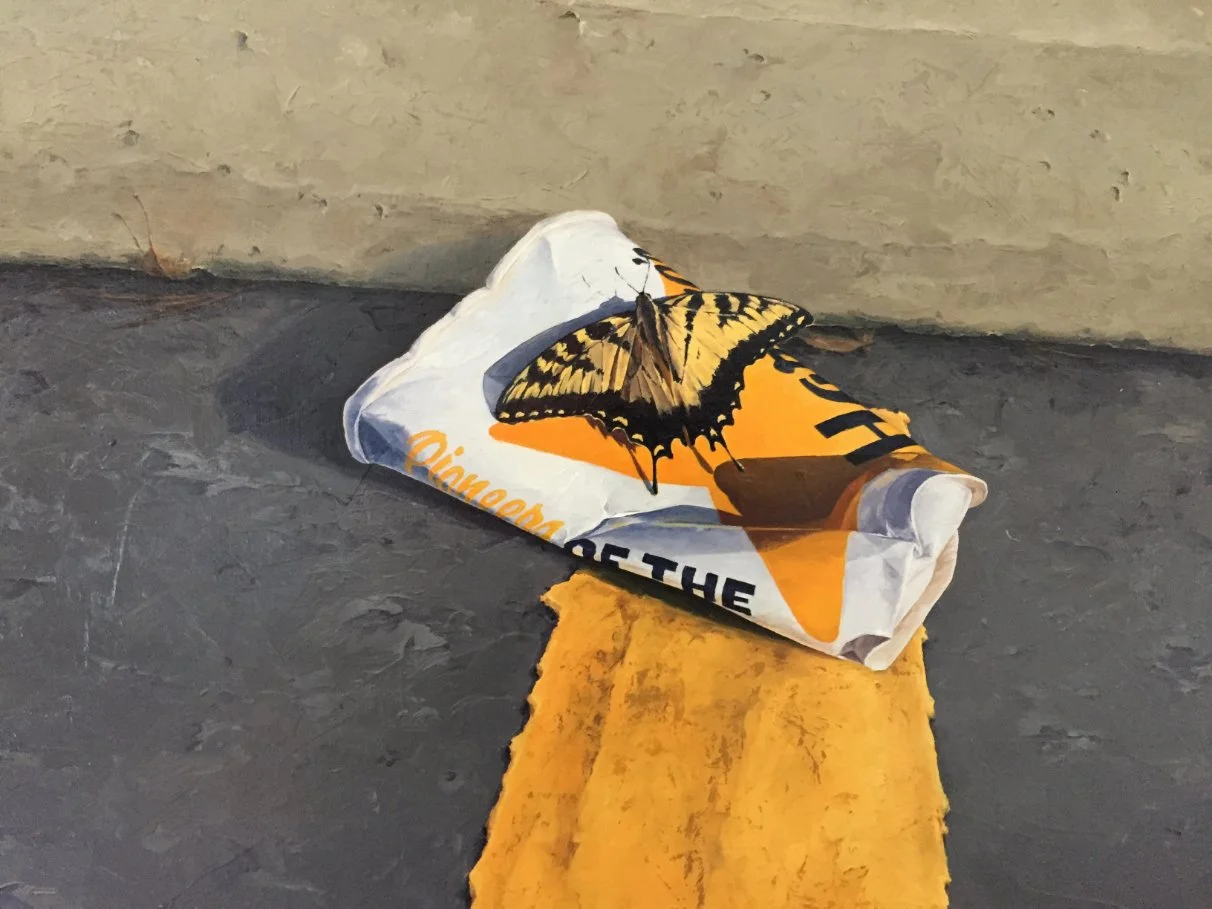
Alighted Enlightenment, Joshua Newth
In the context of this exhibition, “re-inhabiting” (a term borrowed from the Bioregionalism movement of the 1930’s) is a call to restore wildlife to native habitats and rethink our relationship to geographic boundaries. It is also a call to rethink boundaries between art and science. It presents an invitation to step out of siloed roles and step up to conservation action. Some artworks in the exhibition draw attention to these barriers and limitations within wildlife conservation, while others point to a hopeful future in which we all become part of the solution. They urge us to actively commit to caring for the animals, habitats, and natural resources around us.
For example, in Chrysalid Interchange Hand and Pitcher Plant, Rachel Frank uses various kiln-fired materials to explore the malleability of life. She presents a vision of a hopeful, adaptive future. Joshua Newth, in his painting Alighted Enlightenment, portrays the tension between our desire to protect and our capacity to destroy the environment we love.
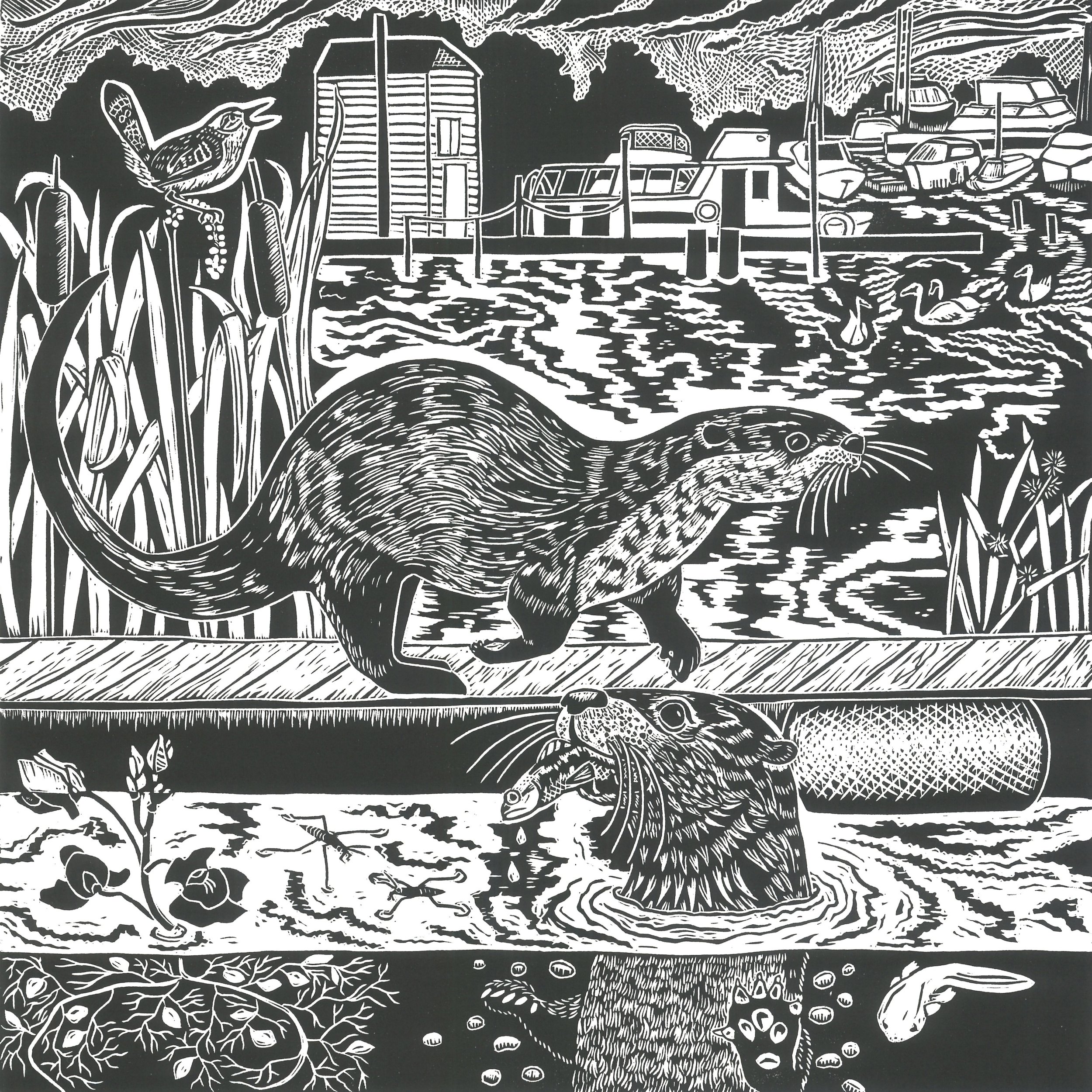
Otters at Dusk, Susan Munderich
Susan Munderich’s Otters at Dusk captures the awe-inspiring presence of nature in our urban environments. Others—such as Kathy Hodge’s Please Excuse Our Appearance: Black Bear—serve as monuments to displaced species and lost habitats.
Collectively, the exhibition celebrates cultural diversity as a reflection of biodiversity, presents a shared language for communicating traditional ecological knowledge and scientific research, and brings wildlife conservation closer to home.
This is the third exhibition in our “Re” conservation series which “re” considers the role of artists in wildlife conservation and explores the possibilities of art informed by science.
Curator, Re-Inhabiting Conservation: Heather McMordie, Director of Curatorial Programs and Exhibits, Creature Conserve.
Curatorial and Production Manager, Re-Inhabiting Conservation: Deanne Fernandes, Creative Content Program Leader, Creature Conserve.

Exhibiting Artists
Adri Pritchard, Alexa Brooks, Alexi Scheiber, Anjali Pujari,Anna Fine Foer, Bandana Paul, Bobby Haskell, Brandie Garner,Carlotta Gessler, Catie Michel, Christopher Brinkman, Claire Coté, Elizabeth Ellenwood, Faith Williams, Dyrsten,George Lorio, James Lilly, Joshua Newth, Kathy Hodge, Laura Juliana Guerrero, Madeline von Foerster, Matthew Werner, Carla Rhodes, Meera Krishnamurthy, Natalie Field, Rachel Frank, Noah Rauch, Rebecca Schultz, Sally Kauffman, Sambita Modak, Sandy Kessler Kaminski, Lisa Kahn Schnell, Shivani Shenoy,Sophie Niemann, Sophy Tuttle, Spencer Tinkham, Susan Munderich, and Valerie Carrigan.
Exhibiting Writers
Anangookwe Wolf,Andrea Ferrari Kristeller,Audacia Ray, Catherine Fletcher, Christine M. Du Bois, Joanna Kaufman, Juliana Roth, Kim Melton, Logan Robins, Shiri Lev, Suze Agnes, Tabassam Shah, and Wendi White.
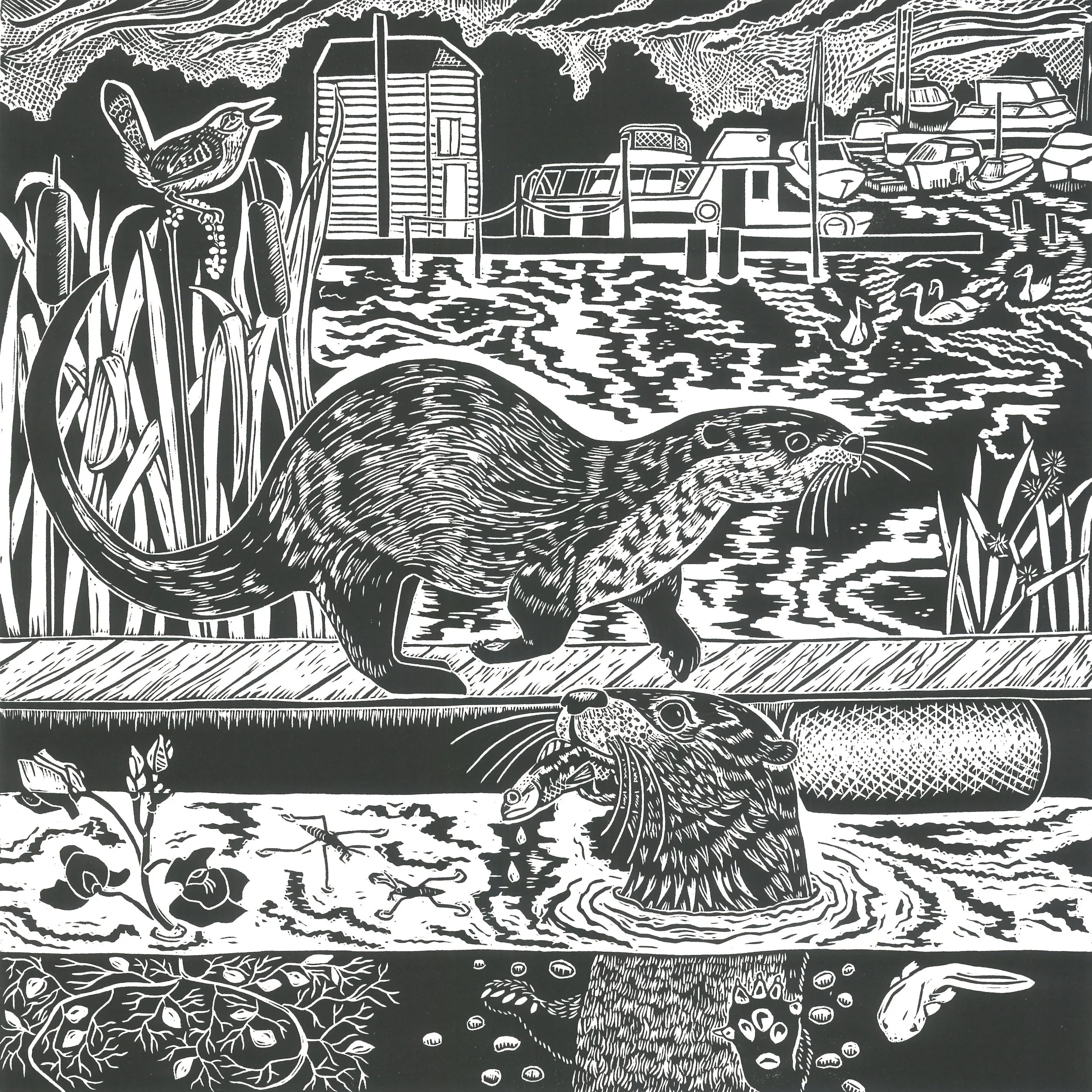
Susan Munderich, Otters at Dusk
Curatorial Theme #1
How do creatures find homes in urban settings?
Click the link below to view the artworks and written works from the exhibition that explore this question.
Curatorial Theme #2
What has been lost by our inattentiveness to wildlife and their habitats?
Click the link below to view the artworks and written works from the exhibition that explore this question.
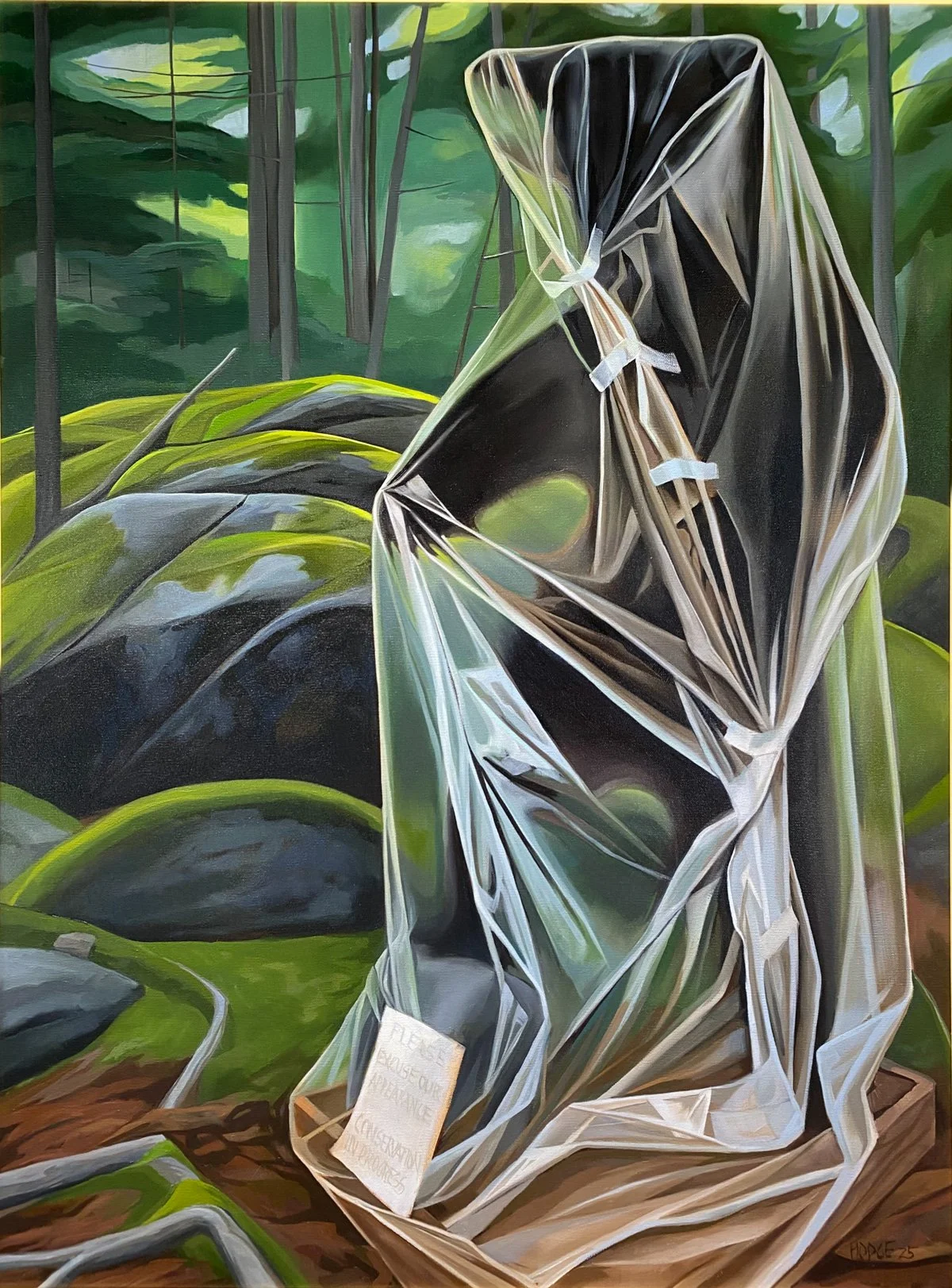
Kathy Hodge, Please Excuse Our Appearance: Black Bear
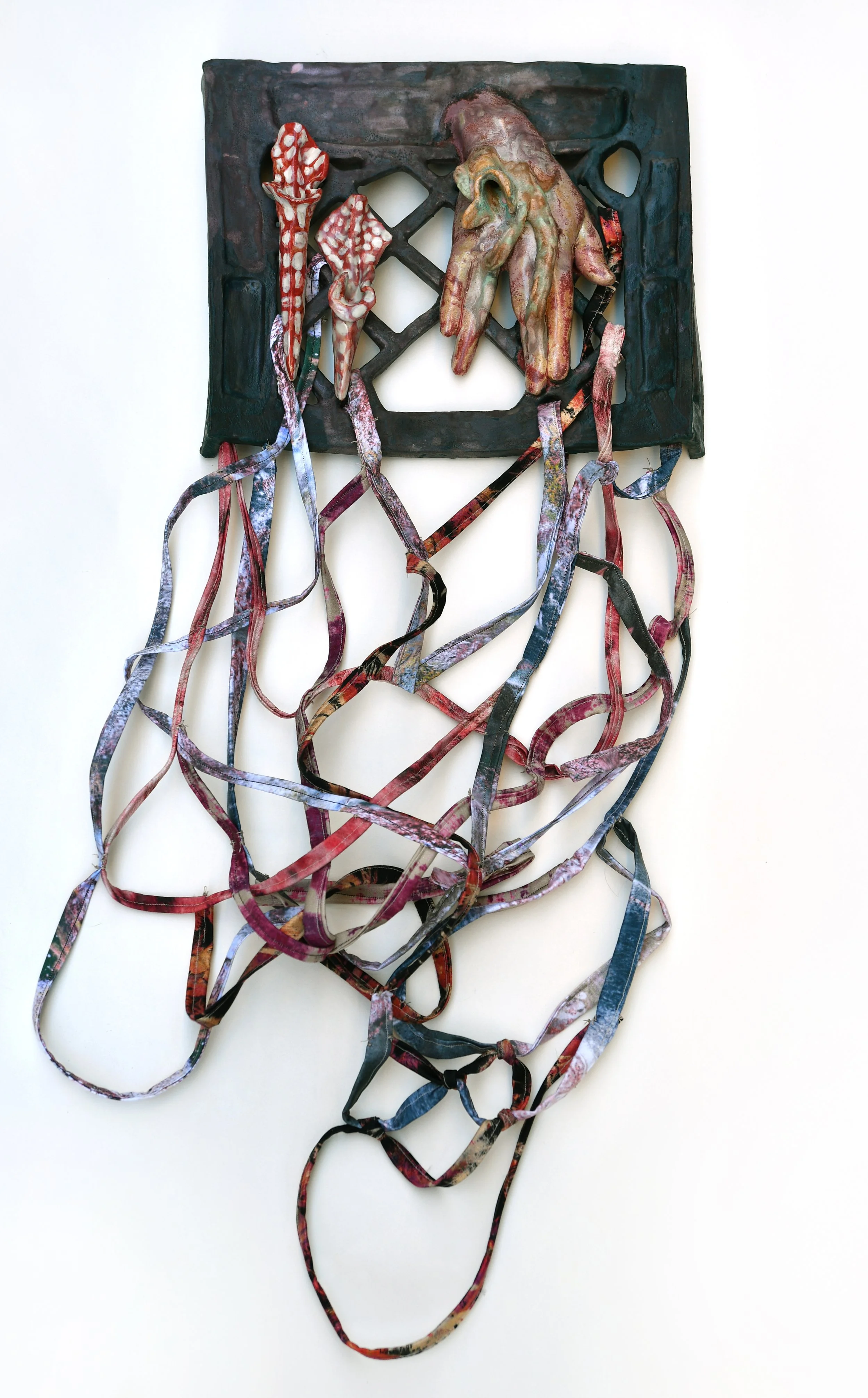
Rachel Frank, Chrysalid Interchange Hand and Pitcher Plant
Curatorial Theme #3
Can we find hope for the future in adaptive ecologies?
Click the link below to view the artworks and written works from the exhibition that explore this question.
Curatorial Theme #4
What knowledge can help reshape and expand our approaches to wildlife conservation?
Click the link below to view the artworks and written works from the exhibition that explore this question.
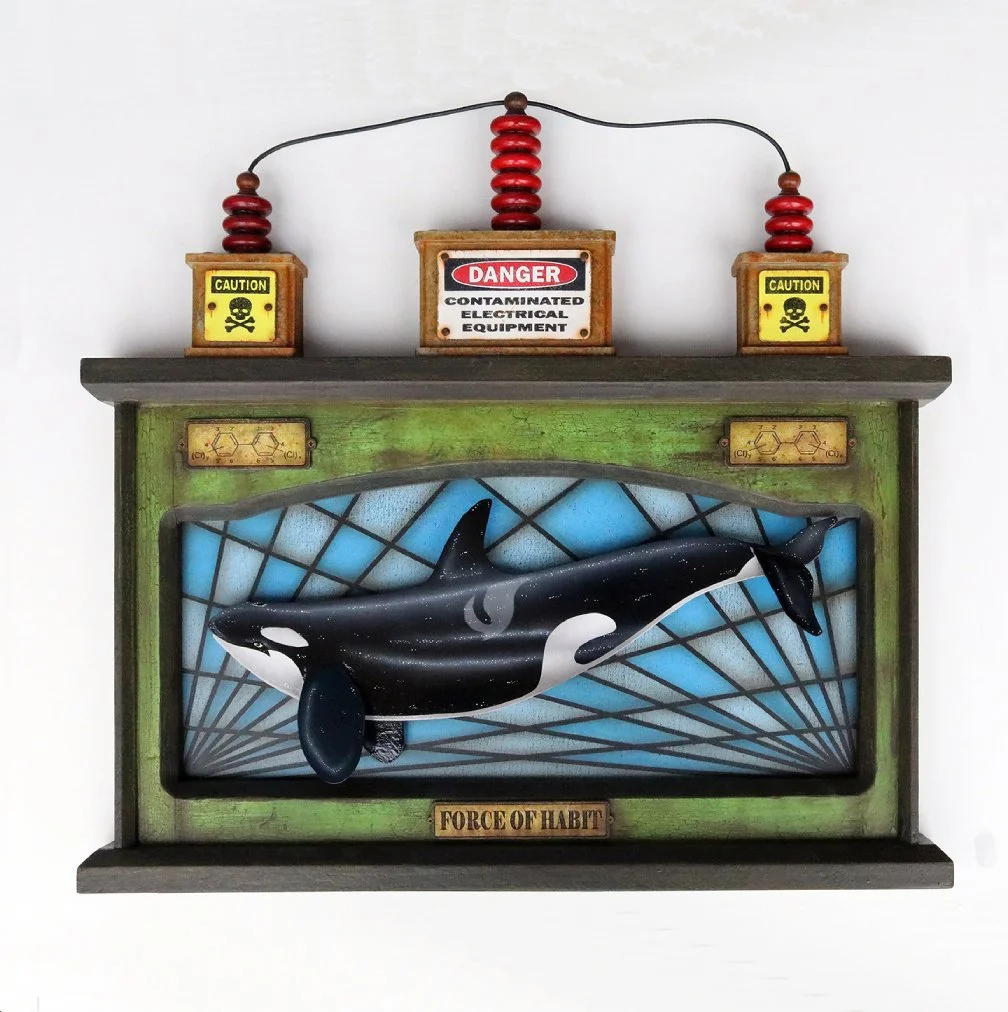
James Lilly, Force of Habitat
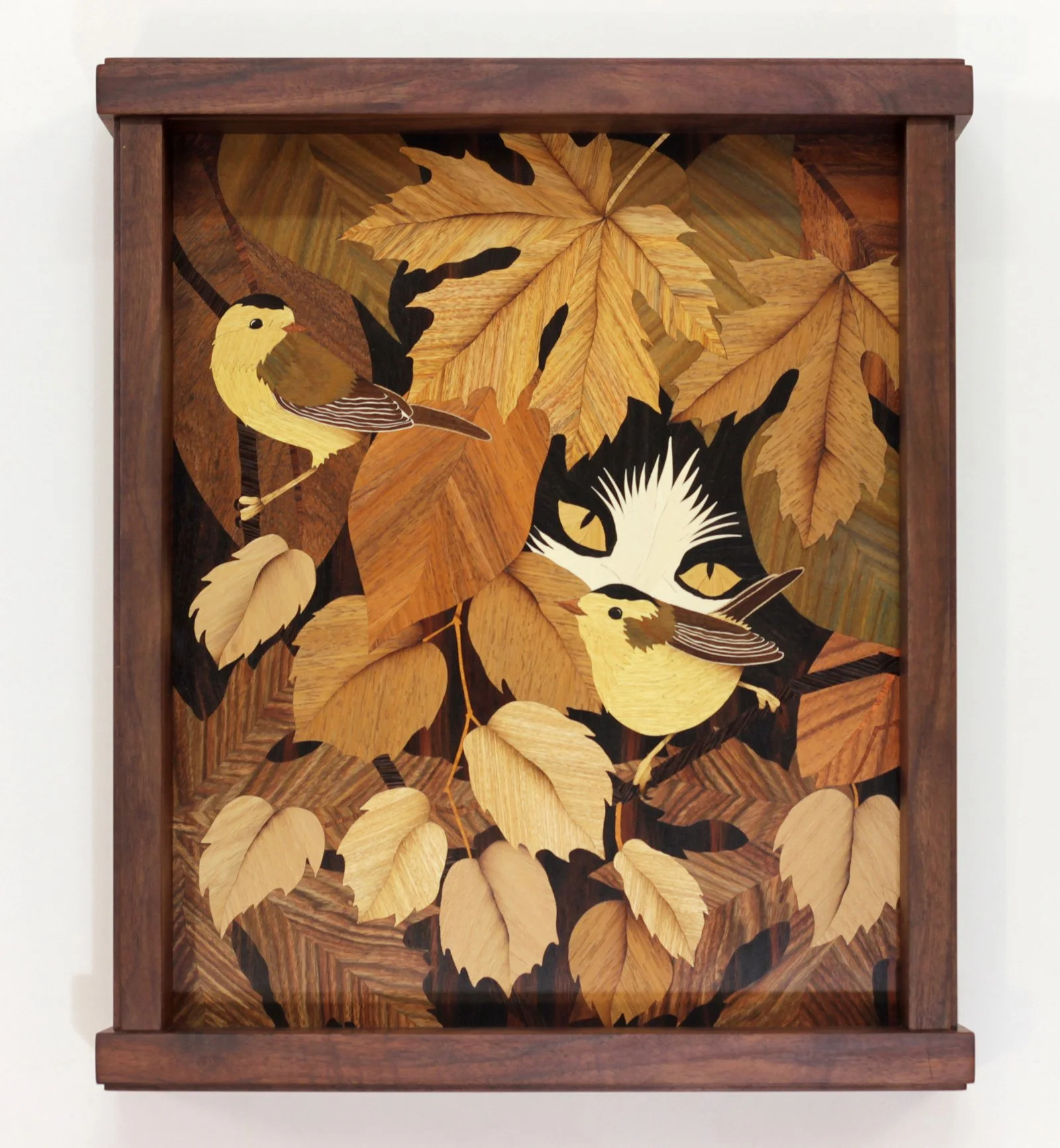
Matthew Werner: EXTINCTION AVIARY: Warblers with Cat
Curatorial Theme #5
How can we be more aware of the ways our lives impact creatures near and far?
Click the link below to view the artworks and written works from the exhibition that explore this question.